Gary Hancock's blog

Gary Hancock's Blog

Friday, 22 June 2012

Happy Birthday, Allan!


Just after 8 pm on my birthday, this email landed in my inbox:

Hi Allan,

Here's to another year of happy travels. When you're out celebrating in Newbury you may like to hint to your friends that one of our top offers below would make a great gift. Or make this the year you visit that must-see destination (check out our favourites for the coming months).

Best wishes,
The Opodo team

Those ‘top offers’ included a three night city break in New York for £526, a flight to Dubai for £312 and an attractively priced 3-star hotel room in Bangkok for £16 (leaving me only with the challenge of working out which friend would pay for my £473 flight).

Opodo gathered some information from me when I booked a flight with them. And they are determined to use it. They know three things about me: that one of my names is Allan, the date of my birthday, and that I used to live near Newbury. They have decided that, as a result, they have a relationship with me.

If Opodo did in fact have a relationship with me, they would know this:
  • No-one who knows me calls me Allan 
  • I live near to Oxford 
  • None of my friends would buy me a flight ticket or a night in a hotel in Bangkok for a present

We have to accept that mass marketers live in a world of personalised rather than personal relationships. But rather than trying to make our communications seem relevant, we should focus on making them actually relevant, by looking beyond the obvious.

On the face of it, Opodo know very little about me. In fact they know much more. They know my age/lifestage. They know that I booked a flight to a European destination, for two adults and a child. They know that I did not book a hotel, or anything else. They know it’s more than two years since I bought anything from them, that they have sent me emails at least twice a month since then, that I open them only when they feature a competition and click through almost never. All of this tells them much more about my propensity to buy from them than my birthday. Their challenge is not to remember to wish me many happy returns, but to find a way of tempting me to come back to them. And e-marketing gives them the flexibility to tailor their proposition, not just the way it is communicated.

Accurate, updated customer and prospect data may appear to be the solution to the problem, but it’s not the whole story. Knowing your customers’ names and birthdays may help to put the finishing touches to your communication, but it won’t guarantee relevance. So when you’re planning your next targeted campaign, don’t ask ‘what personal information are we using in this communication?’ Ask ‘what information are we not using, and how can we start to exploit it effectively?’

Make your message personalised and your customers might open it. Make it relevant and there’s a good chance they will buy.

Friday, 24 June 2011

The pointless gift that says so much

A call from BT:

"We've reviewed your account and you are paying £4 a month too much for your phone and broadband service. For the next 12 months we'd like to reduce your monthly charge. And to thank you for your loyalty we'll send you a BT Vision box. Is that OK with you?"

"Let me just check what you are offering: I commit to a 12 month contract and in return get a £4 a month reduction in my bill, and a BT Vision box. No other commitment. Is that correct?"

"Yes, Mr Hancock, that's absolutely correct".
 
"Sounds great, but I already have Sky so don't want BT Vision. Can you reduce my bill but not send me the box?"

You know how the story ends. I can have the price reduction only if I agree to take delivery of the box. I now have a BT Vision box that I will never use, to accompany the BT Home Hub wireless router that I was sent when I moved house, and that I also don't use. 

BT clearly is concerned about customer retention, and has come up with a deal to entice people to stay. But it commits the cardinal sin of customer management: focusing on the product and not on the customer. The message they intended to convey was "we care about your business". What they actually have communicated is "we aren't listening to you, and we don't care about the unnecessary impact of our activities on the environment".

All my experience tells me that if you focus only on the outcome - in this case increased customer retention - you will achieve less than if you focus on being the best at what you do. Rather than dumping unwanted boxes on its customers to lock them in for 12 months, if BT were to focus on finding out what they would value, meeting their needs and taking greater responsibility for its impact on the environment, it would surely see a more positive impact on customer retention - and on customers' perception of the BT brand.

Tuesday, 21 June 2011

The brand that can afford to ignore customer loyalty

It should be one of the most exciting purchases in your life. Deciding what to buy, working out what you can afford, prioritising, selecting your options, planning for the delivery date. Then there's the question of finance packages. And after-sales service. Sometimes, though, it's more stressful than exciting, which really shouldn't be the case. After all, for many of us, it's the second largest investment we'll ever make, after buying a house. I've just been through the process:

I've always been something of a mainstream buyer, but this was heralded as a once-in-a-lifetime opportunity, with very limited availability. This was the deal: once I had worked out what I wanted, I was to submit an application. I would be told whether I had been successful and, if so, exactly what had been allocated to me (they were available in just three metallic colours) and where I could take delivery (distribution centres were being set up in various locations, mainly in the South of England, but also in places such as Manchester and Newcastle). But the supplier would take my payment before telling me what I would take delivery of, and where. My head told me I was being taken for a ride, but at this point I was so caught up in the hype that I went through with the deal. I had my heart set on the gold one: 0 - 100 in 9.6 seconds, with awesome styling. But in the end they told me I hadn't been allocated anything, although I can apply again for one of the lesser-known versions that no-one else wants. And to do that I have to join an online stampede at 6 a.m. this Friday.

I feel let down. I won't be buying from them again. No business can afford to treat its customers this badly and expect to survive. We all know that customer loyalty is critical to long-term business success. Unless you are a unique business that doesn't expect to be around beyond next year, and doesn't need to concern itself with issues such as reputation, advocacy and customer retention. And I can think of only one of them. I've heard they'll be out of business by the end of August next year. Here's a picture of the salesman who got me hooked.


Friday, 27 May 2011

Enough said


Today I received an email inviting me to download a white paper entitled "Building Customer Centricity through Expertise-Based Interactions".

They could have called it "Doing a great job for your customers by knowing what you're talking about".

But they didn't.

Apparently the paper "discusses the emergence of customer centricity as a result of growing customer sophistication and empowerment across geographies and market segments" and "the need for businesses large and small to embrace customer centricity and to take steps to internalise it as the driving force behind business processes and policies ... by revising business processes to ensure outcomes are customer-oriented and that every activity within a process is aimed at maximizing customer satisfaction" and "by focusing on expertise-based interactions as a way to broaden customer collaboration and participation into the very business processes designed to serve their needs and, by extension, maximizing customer satisfaction and facilitating cross-selling and up-selling."

In other words:

Customers everywhere are getting smarter. You have to be single-minded in getting your whole organisation to give customers a great experience. You have to know what you're talking about. And you have to be ready to change the way you work if it's better for the customer, because that will make them do more and buy more.

Enough said.

Thursday, 5 May 2011

Clarity or consensus? You decide

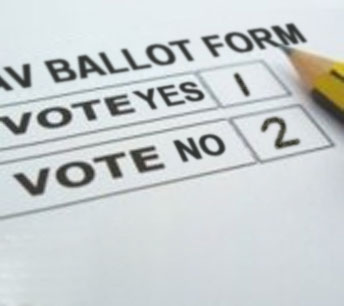
So now we have given our verdict - or at least a few of us have - on one of the most rancorous political debates since, well, the last one. Dozens of explanations, hundreds of arguments and thousands of soundbites occupied a majority of the political elite and a minority of the rest of us in an increasingly frantic anticlimax.

The argument seemed to boil down to this: would you rather be led or represented by someone that more people strongly support than any other candidate, or by someone that most people are prepared to accept?

MPs would have to work harder for our votes, we were told. They'd have to get us on board, appeal to a broad constituency. 'We have to take people with us', you could imagine them saying, when planning how to attract the holy grail of 50.1% of people who at least would accept the idea of their joining the ranks of our 650 elected representatives.

'We have to take people with us': also heard in board rooms and senior management meetings, especially in the not-for-profit sector. We can change the way we work for the better, but only if we can get people onside.

It's a position that is hard to dispute. But how do we get people to share a vision for change? Should leaders appeal to the majority and get everyone to agree on the way forward? Or should they describe a clear vision, energise people with their conviction and recruit advocates who will help them to make change happen?

When I have asked people facing change to choose between two approaches, they have invariably chosen clarity over consensus. 'Tell us what has to happen, explain why it will be better, and make clear what you expect of us'.

Is the direction that more people believe in better than the choice that most will accept? In the case of our democracy, ironically that question was answered by a minority of electors. As for the challenges facing business and fundraising leaders the answer has to be a resounding 'yes'.

Thursday, 6 January 2011

Clients are hapless, timid and lazy: discuss

In one of the leading fundraising blogs I came across this paragraph this week:

"Clients are timid, frightened creatures in the main, too often unable or unwilling to grasp real opportunities for fear that this might render them liable to criticism, or that the suggested initiative might fail. Or that it might entail extra work and inconvenience or,… well, whatever."

I don't for a moment believe that I have the right to make judgements about my clients. But I find them to be people of great integrity: thoughtful, generous and committed.

Perhaps it is fair to say that the fundraising sector is not always the most dynamic. And the need to take care of precious resources (the original meaning of 'stewardship') can lead to a cautious approach to new opportunities and changes of direction. But we shouldn't equate the desire to reflect on challenges and to take time over important decisions with timidity and indolence.

Timid or thoughtful? Lazy or committed? What do you think? And, if you're a client, how would you assess your suppliers?

Friday, 10 December 2010

Customers are stupid: what can we do about it?

Wouldn't it be so much easier to deliver a great customer experience if customers weren't so stupid? I am a customer of Easyjet and today had a real stupid customer experience. A few weeks ago I booked a flight, and took the easy option of agreeing to add their single trip insurance to the deal. Smart people read the small print, within the 14-day cooling off period, to be sure that the policy meets their needs. Real people ('stupid customers') have busy lives and check the policy only a few days before they travel.

Discovering that the policy didn't meet my needs, I called, more in hope than conviction, to ask if they would refund the policy. I haven't made a claim and I haven't taken a flight. I decided it would be a good test of whether they would see the potential of a long term brand advocate. Of course you already know the outcome. The terms of the policy were quite clear. I have no right to cancel. There is nothing they can do.

Really? Nothing they can do? Is there nothing in their customer strategy that acknowledges the relative cost of acquiring a new customer compared with retaining an existing customer? Nothing that recognises that if you take one simple step, costing you almost nothing, to put the customer first, you won't have to invest so much in marketing activity to replace him? Nothing about empowering customer service representatives to play their part in managing customer value rather than simply processing customer transactions?

Today the inevitable post-customer service experience survey arrived in my inbox. Having worked my way through the tick boxes, I reached the 'any other comments' box. I typed three or four sentences about my experience and pressed 'submit'. I was feeling quite virtuous, helping them by providing feedback after such a disappointing experience. My reward: an error dialogue box, informing me that my input contained too many characters. This is how much they value my feedback: they value it so much that it may not be much longer than a tweet.

In this extraordinary world of sophisticated strategies, leading edge technology and integrated customer experience management, we all too easily forget the basics:

Make retaining customers a fundamental part of your customer strategy. Empower customer service representatives to pursue long term value, not just short term income. Give the customer a real opportunity to tell you how they are feeling. And do something about it.

Otherwise your stupid customers will become the smart customers of someone else's business.