Gary Hancock's blog

Gary Hancock's Blog

Friday, 7 March 2014

Small data: big mistake

A two-night stay in Oxford, with free return rail travel: how does that sound? Enticing, perhaps, except to those who live near Oxford and tackle the daily challenge of travelling into and out of the city of steaming tyres. Or the daily commuters who compete for prime locations on Oxford station platform, dreaming of securing a seat for the crawl to the capital.

Despite the allure of two nights in a converted prison, the lead offer in 'Escape', First Great Western's e-newsletter, was hardly compelling for someone like me, who could escape to the Malmaison on foot. Surely they must know where I live? I decided to investigate.

First Great Western asks new users of its online booking engine to register with their name, mobile phone number, email address and postcode. Of these, only the name and email address are mandatory.

If the postcode were a required field, they would know that their other current competition, to win a luxury break in Cornwall, would be more attractive to those of us who long to escape from Oxford's integrated transport system.

How many would drop out of the ticket purchase process if postcode were a required field? And who would object to providing their postcode if, having agreed to receive an e-newsletter, it would result in more relevant offers?

Even without a postcode, an examination of the departure station for most of the tickets I have purchased online would deliver an insight into whether I would rather escape to or from Oxford if, that is, the e-newsletter is segmented (please, @FGW, don't tell me you send the same newsletter to everyone).

Big data may be the latest buzz. But one very small piece of data, combined with intelligence and common sense, could make a big difference to the relevance of your communications to your customers, and their willingness to engage - or escape - with your brand.

Monday, 3 September 2012

Customer experience excellence: you find it in the most unexpected places


Ask any customer management practitioner to name the brands that are true leaders in customer experience excellence and the response generally will include a roll of honour of the usual suspects: Amazon; First Direct; a new addition: Olympic and Paralympic Games Makers. One organisation that you won’t find at the top of the ‘most admired customer experience’ league is Her Majesty’s Police. Perhaps that should change.

Not long ago I contacted the police 101 non-emergency number. Dialling 101 from anywhere in England and Wales allows citizens to make contact with their local police force, in my case the Thames Valley Police. My experience was a master class in customer experience essentials:

The first voice I heard was that of Chief Constable Sara Thornton, delivering a recorded call opening message. My first impression: that the leader of this organisation was committed to delivering a good experience to her customers, even those with very basic enquiries. I was asked to choose one of three options, each of which was clearly described: I was left in no doubt which button to press.

The second voice asked how they could help. The police representative took time to listen to my story and understand what I needed from her. Occasionally she asked for clarification but initially at least, she allowed me to feel in control of the conversation. She provided answers to my questions and took a note of information that she needed for her records. More importantly she empathised, and gave me the impression that her organisation was there to support me. Finally, she gave me a reference number and let me know I could contact them again if I needed further assistance.

What does this experience tell us?

  • Find a way of demonstrating to your customers that delivering a great customer experience is important to everyone in your organisation, including the chief executive or chief constable.
  • Interactive voice response (IVR) can be useful and even welcome if the list of options is short and it leads to a more relevant conversation.
  • Start with your customer’s agenda: you will want to capture information about them, but let them talk first.
  • Take time to listen to your customers, to find out how they feel and what they really need from you: a longer conversation may be more efficient than average handle time statistics might suggest.
  • Once your customer feels comfortable talking with you, they will be more prepared to give you the information you need to drive your future relationship.
  • At the end of every interaction, confirm the next steps, and what the customer can expect to happen next.

A simple, straightforward, excellent experience that reminded me of some of the customer experience fundamentals.

I guess you could call it Customer Experience 101.

Friday, 22 June 2012

Happy Birthday, Allan!


Just after 8 pm on my birthday, this email landed in my inbox:

Hi Allan,

Here's to another year of happy travels. When you're out celebrating in Newbury you may like to hint to your friends that one of our top offers below would make a great gift. Or make this the year you visit that must-see destination (check out our favourites for the coming months).

Best wishes,
The Opodo team

Those ‘top offers’ included a three night city break in New York for £526, a flight to Dubai for £312 and an attractively priced 3-star hotel room in Bangkok for £16 (leaving me only with the challenge of working out which friend would pay for my £473 flight).

Opodo gathered some information from me when I booked a flight with them. And they are determined to use it. They know three things about me: that one of my names is Allan, the date of my birthday, and that I used to live near Newbury. They have decided that, as a result, they have a relationship with me.

If Opodo did in fact have a relationship with me, they would know this:
  • No-one who knows me calls me Allan 
  • I live near to Oxford 
  • None of my friends would buy me a flight ticket or a night in a hotel in Bangkok for a present

We have to accept that mass marketers live in a world of personalised rather than personal relationships. But rather than trying to make our communications seem relevant, we should focus on making them actually relevant, by looking beyond the obvious.

On the face of it, Opodo know very little about me. In fact they know much more. They know my age/lifestage. They know that I booked a flight to a European destination, for two adults and a child. They know that I did not book a hotel, or anything else. They know it’s more than two years since I bought anything from them, that they have sent me emails at least twice a month since then, that I open them only when they feature a competition and click through almost never. All of this tells them much more about my propensity to buy from them than my birthday. Their challenge is not to remember to wish me many happy returns, but to find a way of tempting me to come back to them. And e-marketing gives them the flexibility to tailor their proposition, not just the way it is communicated.

Accurate, updated customer and prospect data may appear to be the solution to the problem, but it’s not the whole story. Knowing your customers’ names and birthdays may help to put the finishing touches to your communication, but it won’t guarantee relevance. So when you’re planning your next targeted campaign, don’t ask ‘what personal information are we using in this communication?’ Ask ‘what information are we not using, and how can we start to exploit it effectively?’

Make your message personalised and your customers might open it. Make it relevant and there’s a good chance they will buy.

Friday, 24 June 2011

The pointless gift that says so much

A call from BT:

"We've reviewed your account and you are paying £4 a month too much for your phone and broadband service. For the next 12 months we'd like to reduce your monthly charge. And to thank you for your loyalty we'll send you a BT Vision box. Is that OK with you?"

"Let me just check what you are offering: I commit to a 12 month contract and in return get a £4 a month reduction in my bill, and a BT Vision box. No other commitment. Is that correct?"

"Yes, Mr Hancock, that's absolutely correct".
 
"Sounds great, but I already have Sky so don't want BT Vision. Can you reduce my bill but not send me the box?"

You know how the story ends. I can have the price reduction only if I agree to take delivery of the box. I now have a BT Vision box that I will never use, to accompany the BT Home Hub wireless router that I was sent when I moved house, and that I also don't use. 

BT clearly is concerned about customer retention, and has come up with a deal to entice people to stay. But it commits the cardinal sin of customer management: focusing on the product and not on the customer. The message they intended to convey was "we care about your business". What they actually have communicated is "we aren't listening to you, and we don't care about the unnecessary impact of our activities on the environment".

All my experience tells me that if you focus only on the outcome - in this case increased customer retention - you will achieve less than if you focus on being the best at what you do. Rather than dumping unwanted boxes on its customers to lock them in for 12 months, if BT were to focus on finding out what they would value, meeting their needs and taking greater responsibility for its impact on the environment, it would surely see a more positive impact on customer retention - and on customers' perception of the BT brand.

Tuesday, 21 June 2011

The brand that can afford to ignore customer loyalty

It should be one of the most exciting purchases in your life. Deciding what to buy, working out what you can afford, prioritising, selecting your options, planning for the delivery date. Then there's the question of finance packages. And after-sales service. Sometimes, though, it's more stressful than exciting, which really shouldn't be the case. After all, for many of us, it's the second largest investment we'll ever make, after buying a house. I've just been through the process:

I've always been something of a mainstream buyer, but this was heralded as a once-in-a-lifetime opportunity, with very limited availability. This was the deal: once I had worked out what I wanted, I was to submit an application. I would be told whether I had been successful and, if so, exactly what had been allocated to me (they were available in just three metallic colours) and where I could take delivery (distribution centres were being set up in various locations, mainly in the South of England, but also in places such as Manchester and Newcastle). But the supplier would take my payment before telling me what I would take delivery of, and where. My head told me I was being taken for a ride, but at this point I was so caught up in the hype that I went through with the deal. I had my heart set on the gold one: 0 - 100 in 9.6 seconds, with awesome styling. But in the end they told me I hadn't been allocated anything, although I can apply again for one of the lesser-known versions that no-one else wants. And to do that I have to join an online stampede at 6 a.m. this Friday.

I feel let down. I won't be buying from them again. No business can afford to treat its customers this badly and expect to survive. We all know that customer loyalty is critical to long-term business success. Unless you are a unique business that doesn't expect to be around beyond next year, and doesn't need to concern itself with issues such as reputation, advocacy and customer retention. And I can think of only one of them. I've heard they'll be out of business by the end of August next year. Here's a picture of the salesman who got me hooked.


Friday, 27 May 2011

Enough said


Today I received an email inviting me to download a white paper entitled "Building Customer Centricity through Expertise-Based Interactions".

They could have called it "Doing a great job for your customers by knowing what you're talking about".

But they didn't.

Apparently the paper "discusses the emergence of customer centricity as a result of growing customer sophistication and empowerment across geographies and market segments" and "the need for businesses large and small to embrace customer centricity and to take steps to internalise it as the driving force behind business processes and policies ... by revising business processes to ensure outcomes are customer-oriented and that every activity within a process is aimed at maximizing customer satisfaction" and "by focusing on expertise-based interactions as a way to broaden customer collaboration and participation into the very business processes designed to serve their needs and, by extension, maximizing customer satisfaction and facilitating cross-selling and up-selling."

In other words:

Customers everywhere are getting smarter. You have to be single-minded in getting your whole organisation to give customers a great experience. You have to know what you're talking about. And you have to be ready to change the way you work if it's better for the customer, because that will make them do more and buy more.

Enough said.

Thursday, 5 May 2011

Clarity or consensus? You decide

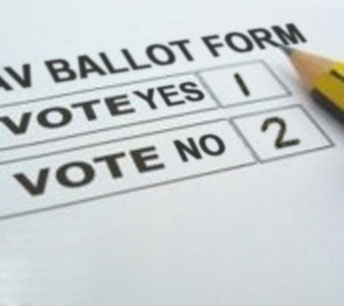
So now we have given our verdict - or at least a few of us have - on one of the most rancorous political debates since, well, the last one. Dozens of explanations, hundreds of arguments and thousands of soundbites occupied a majority of the political elite and a minority of the rest of us in an increasingly frantic anticlimax.

The argument seemed to boil down to this: would you rather be led or represented by someone that more people strongly support than any other candidate, or by someone that most people are prepared to accept?

MPs would have to work harder for our votes, we were told. They'd have to get us on board, appeal to a broad constituency. 'We have to take people with us', you could imagine them saying, when planning how to attract the holy grail of 50.1% of people who at least would accept the idea of their joining the ranks of our 650 elected representatives.

'We have to take people with us': also heard in board rooms and senior management meetings, especially in the not-for-profit sector. We can change the way we work for the better, but only if we can get people onside.

It's a position that is hard to dispute. But how do we get people to share a vision for change? Should leaders appeal to the majority and get everyone to agree on the way forward? Or should they describe a clear vision, energise people with their conviction and recruit advocates who will help them to make change happen?

When I have asked people facing change to choose between two approaches, they have invariably chosen clarity over consensus. 'Tell us what has to happen, explain why it will be better, and make clear what you expect of us'.

Is the direction that more people believe in better than the choice that most will accept? In the case of our democracy, ironically that question was answered by a minority of electors. As for the challenges facing business and fundraising leaders the answer has to be a resounding 'yes'.